Home Broadband vs. Mobile Broadband
.jpg) • 20 Nov 2025
• 20 Nov 2025
Is mobile broadband coming for standard home broadbands crown…
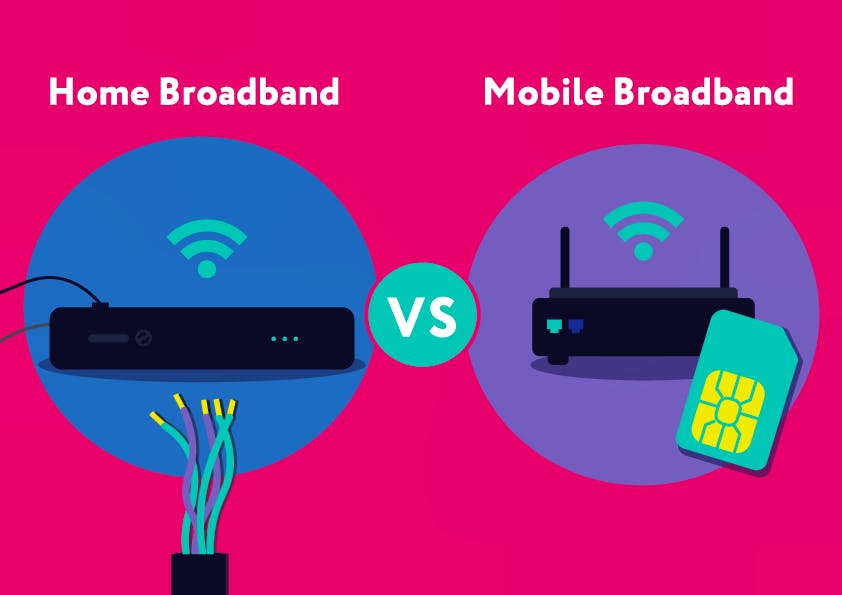
As our internet habits continue to evolve, the question of whether home broadband or mobile broadband is the better choice has become more relevant than ever.
With full fibre networks expanding across the UK and mobile networks rapidly rolling out 5G and 5G+, many households are now finding that either option could realistically keep them online.
While standard home broadband has long been the go-to option, there has been a rise in households opting for mobile broadband due to what it can offer.
With benefits and drawbacks to both, we’re diving deeper into the two to see how they work, how they compare and where they can be better for certain households.
Home broadband
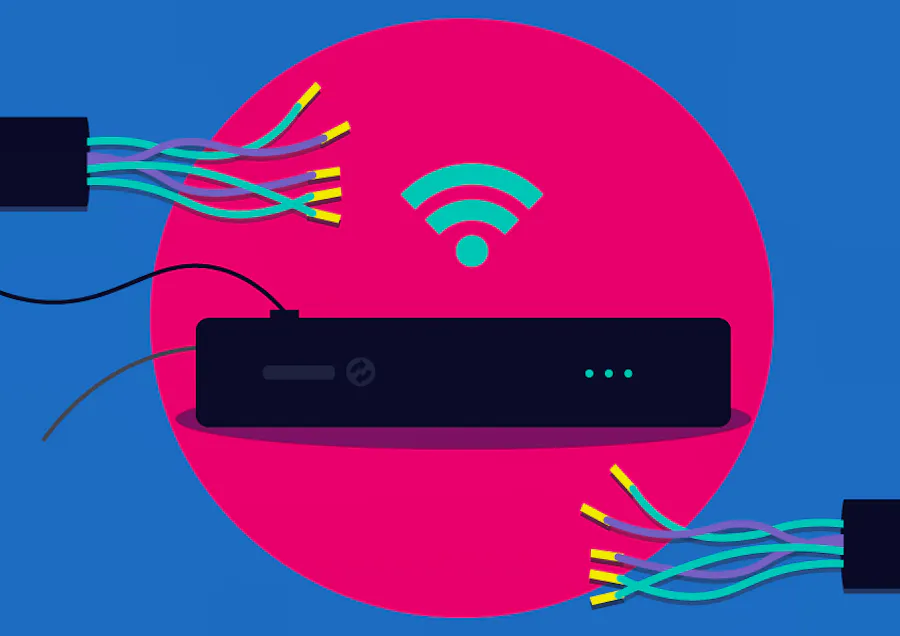
Standard home broadband is the most common and well-known connection within homes. It sees a wired connection that is run from the local telephone exchange to your home, either using entirely fibre cables or part-fibre (more on that in a bit).
This broadband technology has been improved greatly over the years to the point now where it is capable of offering mind-boggling speeds that were once only a dream for the average home.
These speeds are available depending on the type of connection you can receive, with the two most common being FTTC and FTTP.
FTTP (Fibre-to-the-Premises/full fibre)
- The fastest and most reliable option
- Fibre-optic cables run all the way to the home
- Speeds typically range from 100Mbps to 1Gbps+, depending on provider & network
FTTC (Fibre-to-the-Cabinet/Part-Fibre)
- Uses fibre cables to your local street cabinet, then copper cables to the home
- Speeds usually range from 30 - 70Mbps
- More common than full fibre but gradually becoming outdated
You can also still find other older connections, such as ADSL, which uses copper phone lines throughout the network and only offers 10 - 17Mbps speeds.
This connection is and has been slowly phased out in favour of FTTC, while the same goes for FTTC to FTTP, until eventually all UK households will (theoretically) have full fibre speeds available to them.
In the UK, there are a number of networks that supply a connection to providers, with the main ones being Openreach (owned by BT) and Virgin Media (owned and operated solely by Virgin Media).
You can also find other providers that offer their own and operate their own networks separate to Openreach and Virgin Media. These are known as AltNet providers.
Home broadband: Pros and cons
Pros
- Fast and reliable speeds - Delivers a more stable connection with consistent speeds throughout the day and can easily support heavy usage such as streaming, gaming, and large downloads
- Ideal for multi-user households - Fixed-line connections can handle dozens of devices at once without slowing down significantly, making them perfect for families, shared houses, and smart homes
- Low latency for gaming and video calls - Home broadband generally has lower ping and fewer fluctuations than mobile broadband, which is important for things like online gaming and remote working
- Works well everywhere in the home - With a decent router (or mesh Wi-Fi/range extenders if needed) home broadband can cover your entire property. Thick walls are less of an issue than they are for mobile signals
- Unlimited data - Most UK broadband providers offer unlimited usage as standard, removing any worries about data caps, throttling, or extra charges
Cons
- Requires installation - Many connections need an engineer visit or activation, which can involve waiting times and potentially setup fees. Not ideal for people who need internet immediately and possible extra fees is less desirable
- Can be more expensive upfront - On top of potentially setup fees, you may have to pay line rental (even if you don’t use a landline although not needed for full fibre) and contract termination charges if you move home or want to leave early
- Long contracts - 12–24 month contracts are common. If your circumstances change - such as moving home - you may face fees or service interruptions
- Coverage still varies - Full fibre isn’t available everywhere yet. Some rural or remote areas may only have slower FTTC or legacy copper connections
- Performance depends on local infrastructure - If the local cabinet is outdated or far from your home, or if street-level infrastructure is congested, your speeds may be lower than advertised
Mobile broadband
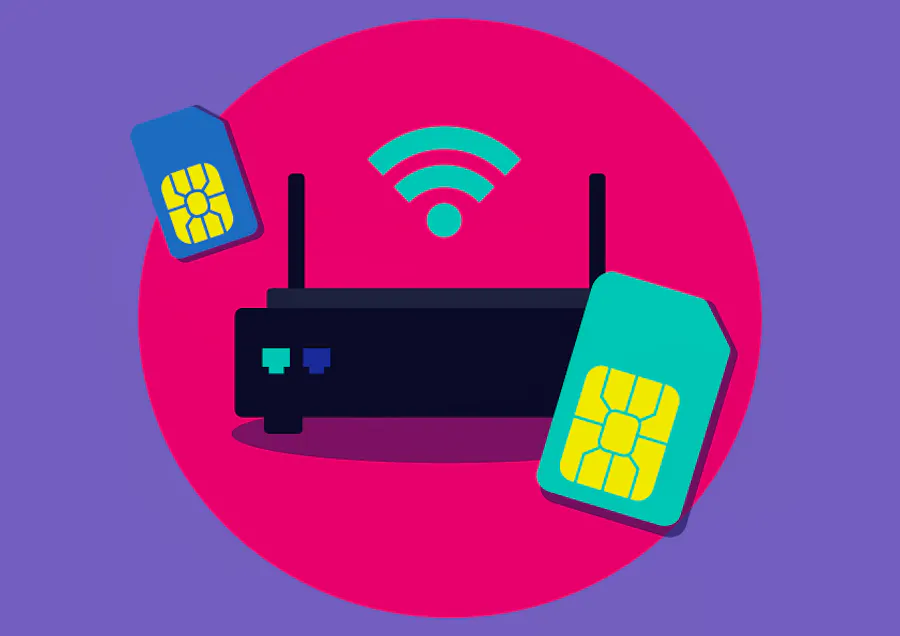
While mobile broadband can be used on the go, we’re specifically looking at it as the main network in your home, acting as an alternative to the standard cable home broadband.
In either case, the way mobile broadband works is that it connects to the internet over the same mobile networks used by smartphones. Instead of fixed lines, it uses 4G, 5G or 5G+ signals transmitted by a mobile mast.
This means that the speeds available to you are dependent on the signal it can get. 4G is adequate for lower usage households, while 5G+ supported areas can see speeds that rival FTTP connections.
Where mobile broadband shines is in its availability, mainly for those in more rural parts. As someone who lives in an area that still can only get ADSL home broadband, mobile broadband is the answer to my slightly-higher -than-ADSL-usage household.
Both home and mobile broadband have companies dedicated to constantly expanding and upgrading their networks to keep the nation well connected, and that includes branching out to more remote areas/those on the outskirts of bigger, more connected cities.
Each new mobile network generation comes every 10 years or so - 3G to 4G came in the late 2000s/early 2010s, then the upgrade to 5G began in 2019, while 6G technology is expected to begin deployment in the early 2030s.
A new generation brings better speed and more reliability, then it is up to the individual network providers to implement the technology and distribute the coverage. In the UK, there is the “Big Four”, which is made up of:
- O2
- Three
- Vodafone
- EE
All mobile providers available in the UK use the infrastructure of one of those four networks, so unlike home broadband and the AltNet offerings, you can have more certainty as to what network offers the best coverage in your area.
Mobile broadband: Pros and cons
Pros
- Quick and easy setup - Mobile broadband requires no engineer visit, drilling, or waiting around for installation. You simply plug in a 4G/5G home router or switch on a MiFi device and you’re online immediately
- No landline or cables needed - Ideal if you don’t want to pay for a phone line or don’t have access to good fixed-line infrastructure (e.g., poor FTTC, no full fibre)
- Flexible contracts - Mobile broadband often offers varying plan lengths, ranging from 24-month to monthly rolling contracts, the latter of which being low-to-no commitment contracts, meaning you can leave whenever you’d like, making it perfect for renters or those who don’t like to be tied down (with their broadband, at least)
- Good option if fibre isn’t available - If you’re stuck with outdated FTTC or slow copper lines, mobile broadband may provide a better and more modern alternative
- Can be moved around the home - If one room has poor signal, you can reposition the router for better reception - something you can’t do with fixed-line broadband sockets
Cons
- Performance depends heavily on coverage - If you’re in a weak 4G/5G area or your home has thick walls, router placement becomes crucial and performance may be poor
- Speeds can fluctuate - Mobile broadband relies on signal strength, weather, and network congestion. This means speeds can be inconsistent - especially at peak times or in densely populated areas
- Higher latency than fixed broadband - Ping can vary throughout the day, which affects things like online gaming and video calls
- Not as reliable for long-term heavy use - While mobile broadband is improving quickly, it’s not yet a full replacement for home broadband in every scenario, particularly where reliability and consistent speed are essential
- May come with data limits - Even “unlimited” plans can have fair-use caps or speed throttling after heavy usage, which would affect heavy streamers and large households - although do note these are can and not definite.
Home broadband vs Mobile broadband: Head-to-head
Reliability & Performance
Aspect | Home Broadband | Mobile Broadband |
| Consistency | Very stable, minimal fluctuations | Can vary depending on signal, weather, congestion |
| Latency (Ping) | Low and predictable | Higher and more variable, especially on 4G |
| Peak-Time Slowdowns | Rare, mostly affects slower FTTC lines | Common in busy areas due to network load |
| Interference | Generally unaffected by external factors | Sensitive to distance from mast and indoor signal blockage |
| Best Use Cases | Gaming, video calls, remote work, streaming | Light-to-medium home use, browsing, streaming on strong 5G |
Cost Comparison
Cost Factor | Home Broadband | Mobile Broadband |
| Monthly Price (avg. cost in UK) | £25-£60
| £20-£30 for unlimited data plans |
| Setup Fees | Possible activation/installation charges | Usually none |
| Equipment | Router included, optional extenders/mesh systems are extra | 4G/5G router |
| Contract Length | 24 months standard, some may offer 12 or 18 months, monthly rolling contracts rare | More typical to find monthly rolling contracts, 12-month and 24-month contracts also available |
| Extra Charges | Early exit fees usually exist, potential setup/installation charges, engineer callouts may cost | Potential charges for exceeding data allowance (on limited data plans) |
| Value for Heavy Users | Excellent (unlimited data) | Can be costly if usage is high (on limited data plans) |
Convenience & Flexibility
Feature | Home Broadband | Mobile Broadband |
| Setup Time | May take days or weeks depending on engineer availability or hardware delivery | Instant - plug in and go |
| Portability | Fixed to your address | Can be moved within the home or taken when relocating |
| Installation | May require engineer visit | No installation needed |
| Ideal For | Long-term residents, larger households | Renters, frequent movers, temporary setups, low-usage households |
| Backup Option | Usually not used as backup | Great as a secondary/backup connection |
Suitability for Different Activities
Activity | Home Broadband | Mobile Broadband (Home Use) |
| HD/4K/8K Streaming | Excellent | Good on strong 5G, less reliable on 4G |
| Online Gaming | Best option (low ping) | Acceptable on strong 5G, poor on 4G |
| Video Calls/Remote Work | Very reliable | Can be affected by signal fluctuations |
| Large Downloads | Fast on fibre | Good on strong 5G, slower on 4G |
| Smart Home Devices | Handles many devices easily | May struggle with multiple simultaneous connections |
| Casual Browsing | Excellent | Excellent |
| Sharing Among Many Users | Very good | Limited by signal and router capability |
Coverage Considerations
Consideration | Home Broadband | Mobile Broadband |
| Availability | Depends on FTTP/FTTC/cable rollout | Depends on 4G/5G coverage strength |
| Urban Areas | Strong fibre availability | Typically strong 5G; excellent performance |
| Rural Areas | Fibre may be limited; slower FTTC common | 4G often available, though indoor signal may vary |
| Indoor Coverage | Works the same in all rooms with good Wi-Fi | May require careful router placement for best signal |
| Checking Coverage | Check postcode with broadband providers | Check mobile network coverage maps for 4G/5G |
Find a Deal
Enter your postcode to see the latest offers in your area.
Don't miss our latest deals
Sign up to receive unmissable offers and the latest news on TV, broadband, energy, phones and more.








Latest News





Broadband Speed Test
Find out whether you could be getting faster home broadband speeds. Our speed test will check your current broadband and let you compare with other speeds in your area.
Test your broadbandBroadband Usage Calculator
Answer a few quick questions and our broadband usage calculator will give you a data estimate for your household. Using this we'll recommend the best kind of deal for you.
Calculate